
Moringa Powder Benefits: Evidence-Based Health Benefits, Uses & Safety
9 min read
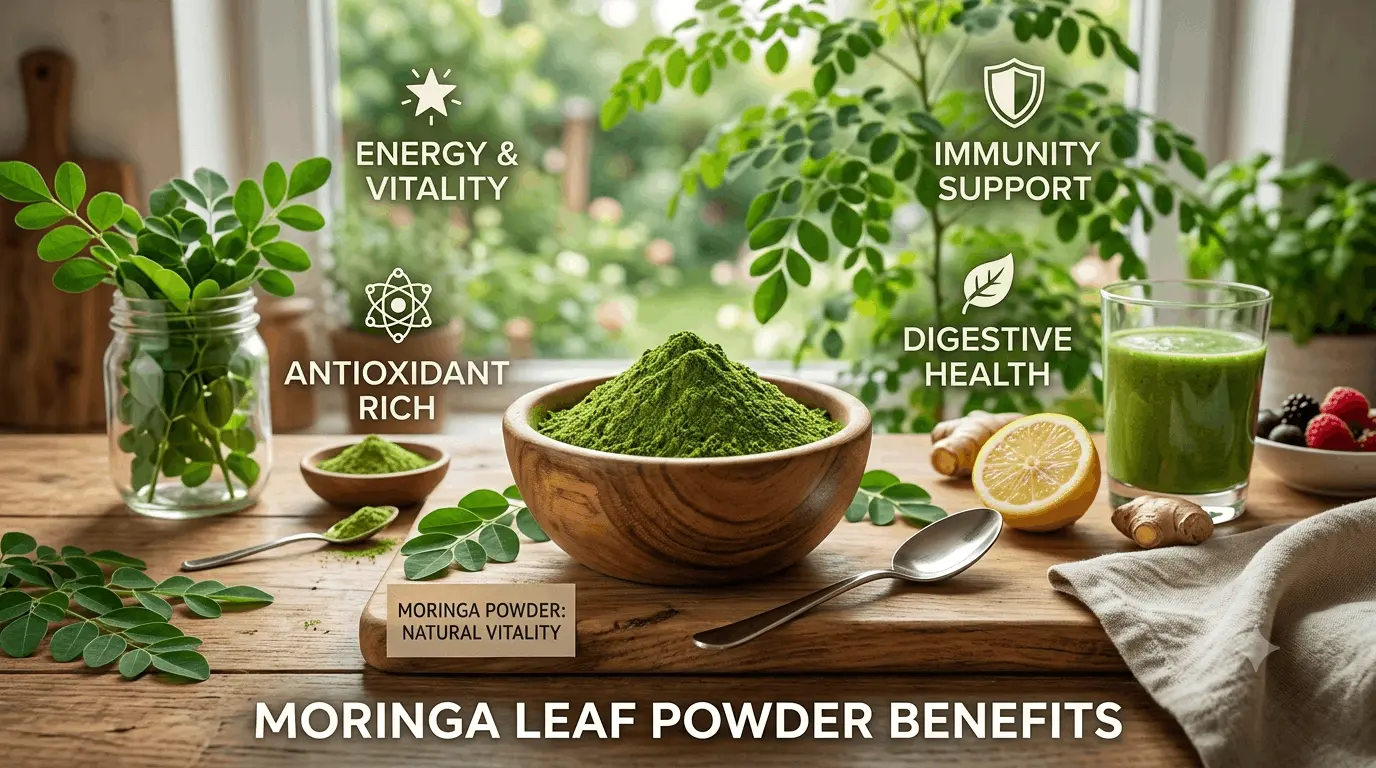
Moringa powder has become one of the most talked-about superfoods in recent years. From smoothies and herbal teas to protein shakes, it seems to be everywhere. But does it actually live up to the hype?
The truth is somewhere in the middle. While social media often promotes moringa as a miracle food, scientific research paints a more balanced picture. Moringa powder is packed with vitamins, minerals, antioxidants, and beneficial plant compounds that may support overall health. At the same time, researchers agree that many of its claimed medicinal benefits still require larger human studies.
In this guide, we'll explore the moringa powder benefits backed by current research, its nutritional value, practical uses, possible side effects, and how to choose a high-quality product. Whether you're curious about the benefits of moringa powder or wondering if it's worth adding to your daily routine, this article will help you make an informed decision.
What Is Moringa Powder?
Moringa powder is made from the dried leaves of Moringa oleifera, often called the "drumstick tree" or the "miracle tree." It is native to parts of India, Africa, and Southeast Asia and has been used in traditional medicine for centuries.
Today, the leaves are carefully harvested, washed, dried at low temperatures, and ground into a fine green powder. Drying the leaves helps preserve many of their nutrients while making the powder easy to store and use.
You'll find moringa in different forms, including:
-
Fresh moringa leaves
-
Moringa leaf powder
-
Capsules
-
Herbal tea
-
Liquid extracts
Among these, moringa leaf powder is the most versatile because it can easily be mixed into foods and drinks.
Why the Leaves Are Used
The leaves contain the highest concentration of nutrients and beneficial plant compounds. According to research published in the National Center for Biotechnology Information (NCBI), moringa leaves contain more than 90 bioactive compounds, including vitamins, minerals, flavonoids, phenolic acids, and antioxidants that contribute to many of the reported moringa leaf powder benefits.
Moringa Powder Nutrition: Why Is It Considered Nutrient Dense?
One reason moringa has gained so much attention is its impressive nutritional profile.
According to the Healthline nutrition review and multiple scientific studies, moringa leaves provide a wide variety of essential nutrients while remaining relatively low in calories.
Supports collagen production and immunity
Polyp
Nutrient |
Why Your Body Needs It |
|---|---|
Protein |
Supports muscle repair and tissue growth |
Fiber |
Helps maintain healthy digestion |
Calcium |
Supports strong bones and teeth |
Iron |
Helps carry oxygen throughout the body |
Potassium |
Supports heart, nerve, and muscle function |
Vitamin A |
Maintains healthy vision and immune function |
Vitamin C |
Supports collagen production and immunity |
henols
Help protect cells from oxidative stress
The exact moringa powder nutrition profile depends on factors such as where the plant is grown, harvesting methods, drying temperature, and storage conditions.
According to the peer-reviewed review published by NCBI, researchers have identified over 90 bioactive compounds in moringa leaves, including quercetin, chlorogenic acid, kaempferol, glucosinolates, and isothiocyanates. These compounds are believed to contribute to many of moringa's potential health benefits.
Evidence-Based Moringa Powder Benefits
Although moringa contains many beneficial nutrients, scientists continue to study exactly how these compounds affect human health. Here are the most promising moringa powder benefits supported by current research.
Rich in Antioxidants That Help Protect Cells
Every day, your body produces unstable molecules called free radicals. When they build up faster than your body can remove them, they create oxidative stress, which may damage healthy cells over time.
Antioxidants help neutralize these free radicals.
Moringa leaves naturally contain antioxidants such as:
-
Quercetin
-
Chlorogenic acid
-
Vitamin C
-
Beta-carotene
-
Polyphenols
According to the NCBI comprehensive review, these compounds have shown strong antioxidant activity in laboratory and animal studies, helping reduce oxidative stress. However, researchers also note that larger clinical studies in humans are still needed before drawing firm conclusions.
Key takeaway: Moringa is a rich natural source of antioxidants that may help protect cells from oxidative damage.
May Help Support the Body's Natural Inflammatory Response
Inflammation is your body's normal way of responding to injury or infection. Short-term inflammation helps healing, but long-lasting inflammation may contribute to several chronic health conditions.
Scientists believe some plant compounds in moringa, particularly isothiocyanates and flavonoids, may help support a healthy inflammatory response.
Research reviewed by NCBI suggests these compounds may reduce certain inflammatory markers in laboratory and animal studies. Human research remains limited, so moringa should not be considered a treatment for inflammatory diseases.
What this means: Including antioxidant-rich foods like moringa as part of a balanced diet may support overall wellness, but they should not replace prescribed medical treatment.
How Does it Help Support Healthy Blood Sugar Levels
One of the most researched benefits of moringa powder involves blood sugar regulation.
Some small human studies have reported modest improvements in blood sugar levels after consuming moringa leaf preparations. Researchers believe antioxidants and plant compounds may improve how the body responds to insulin.
According to both the Healthline review and the NCBI research paper, these findings are encouraging but still preliminary because many studies involve small sample sizes.
Current evidence suggests:
-
Some people may experience improved blood sugar control.
-
More high-quality human studies are needed.
-
Moringa should never replace diabetes medication prescribed by a healthcare professional.
How Does it Support Heart Health
Your heart benefits from a healthy lifestyle that includes nutritious foods, regular exercise, adequate sleep, and stress management.
Moringa may contribute to heart health in several ways.
Research suggests its antioxidants may help reduce oxidative stress, while certain plant compounds have shown potential for supporting healthy cholesterol and blood pressure levels in animal and human studies.
According to Northwestern Medicine, moringa may complement a heart-friendly diet because it contains antioxidants, vitamins, minerals, and plant nutrients. However, it should be viewed as one part of an overall healthy lifestyle—not a stand-alone solution.
How it Will Help Fill Everyday Nutrient Gaps
Many adults struggle to eat enough leafy green vegetables every day.
That's where moringa powder can be useful.
A small spoonful provides several nutrients commonly lacking in modern diets, including:
-
Iron
-
Calcium
-
Potassium
-
Vitamin A
-
Vitamin C
-
Plant protein
For people following vegetarian or plant-based eating patterns, moringa can be an easy way to increase nutrient intake alongside a varied diet.
Remember: It works best as a supplement to healthy eating not as a replacement for fruits and vegetables.
Does Moringa Support Liver Health
The liver performs hundreds of important functions of body, including processing nutrients and removing waste products from the body.
Animal studies have shown that moringa's antioxidants may help protect liver cells from oxidative stress.
According to the NCBI review, these findings are promising, but researchers emphasise that evidence in humans is still limited.
That means moringa should be viewed as a nutritious food rather than a treatment for liver conditions.
Does Moringa Support and Nourish Healthy Skin
Healthy skin depends on good nutrition.
Moringa naturally contains:
-
Vitamin A
-
Vitamin C
-
Antioxidants
-
Polyphenols
Vitamin C supports normal collagen production, while antioxidants help protect skin cells from oxidative stress.
Although skincare products often market moringa as an anti-ageing ingredient, most current evidence relates to its nutritional value rather than direct cosmetic effects.
What Is Moringa Powder Good For?
If you're wondering what is moringa powder good for, the simplest answer is that it helps increase your intake of beneficial nutrients and antioxidants.
People commonly use moringa powder to:
-
Add extra vitamins and minerals to meals
-
Increase antioxidant intake
-
Support a balanced diet
-
Add plant-based protein to recipes
-
Make smoothies more nutritious
-
Mix into soups and curries
-
Mix into yogurt or oatmeal
-
Blend into fresh juices
Its mild earthy flavor pairs well with many everyday foods, making it easy to include in your routine.
Moringa Powder Uses in Everyday Life
One of the biggest advantages of moringa is how easy it is to use.
Here are some practical moringa powder uses:
Smoothies
Blend half a teaspoon into a fruit smoothie with banana, mango, spinach, or pineapple.
Herbal Tea
Mix a small amount with warm water, lemon, and honey for a simple herbal drink.
Yogurt
Stir it into plain yogurt with berries and nuts.
Soups
Add moringa during the final few minutes of cooking to help preserve more nutrients.
Salad Dressings
Whisk it into homemade olive oil and lemon dressing.
Overnight Oats
Mix it with oats, chia seeds, milk, and fruit.
Protein Shakes
Combine it with plant-based or whey protein after exercise.
Energy Balls
Blend moringa with dates, oats, nuts, and seeds for a nutritious snack.
Tip: Start with about half a teaspoon. Moringa has a naturally earthy taste, so gradually increasing the amount helps your taste buds adjust.
Is Moringa Powder Healthy?
For most healthy adults, the answer is yes—when consumed in moderation as part of a balanced diet.
People choose moringa because it offers:
-
A wide range of vitamins and minerals
-
Natural antioxidants
-
Beneficial plant compounds
-
Easy ways to increase nutrient intake
At the same time, it's important to keep realistic expectations.
Moringa does not:
-
Replace vegetables and fruits
-
Cure chronic diseases
-
Work like a medicine on its own
-
Compensate for an unhealthy lifestyle
The quality of supplements also varies considerably. Choosing products from reputable manufacturers that provide third-party testing can help ensure purity and safety.
Are There Any Side Effects or Safety Concerns?
Moringa is generally well tolerated when consumed in moderate amounts.
Some people may experience:
-
Mild stomach discomfort
-
Gas
-
Loose stools
-
Digestive upset when taking large amounts
If you take medications for diabetes or high blood pressure, speak with your healthcare provider before using moringa regularly because it may enhance the effects of these medicines.
Pregnant women should also seek medical advice before using moringa supplements. According to scientific reviews, while the leaves are commonly eaten as food in many cultures, extracts from the root, bark, or flowers may not be considered safe during pregnancy.
How Much Moringa Powder Should You Take?
There is no single recommended daily dose suitable for everyone.
A practical approach is to:
-
Start with about ½ teaspoon per day
-
Increase gradually if well tolerated
-
Follow the serving instructions on the product label
-
Avoid taking excessive amounts
Using a moderate amount consistently is generally a better approach than taking very large servings occasionally.
How to Choose High-Quality Moringa Powder
Not all moringa powders are produced the same way.
Before buying, check for:
-
Organic certification when available
-
Third-party quality testing
-
Bright natural green colour
-
Fresh earthy smell
-
Airtight packaging
-
No artificial fillers or additives
-
Clearly labelled country of origin
Choosing a high-quality product helps you get the nutritional benefits while reducing the risk of contamination or poor-quality ingredients. When used in moderation alongside a healthy diet, moringa powder can be a simple way to add more nutrients and antioxidants to your daily routine. Current research supports several promising health benefits, but it is best viewed as a nutritious food.
The Amrit Powder Team
A small team of herbalists, nutrition nerds, and slow-living enthusiasts writing about adaptogens, everyday rituals, and clean nutrition — straight from our kitchen to yours.